Silence Recorder
A recorder that records no sound. What it keeps are the moments when the world goes quiet.
The images are model-generated; the concept, narrative structure, continuity spec, and acceptance criteria are mine.
The idea
A recorder is meant to hold sound; this concept work reverses the premise. The machine records nothing — it collects the moments when the world goes quiet.
Four scenes light its four indicator lamps in turn: a train leaving the station, the last ripple after the rain stops, a snowfield absorbing sound, the last light going out in a late-night office.
Silence is not emptiness here; it is a collection, and the four lamps show how much of it has been gathered.
Four silences
-
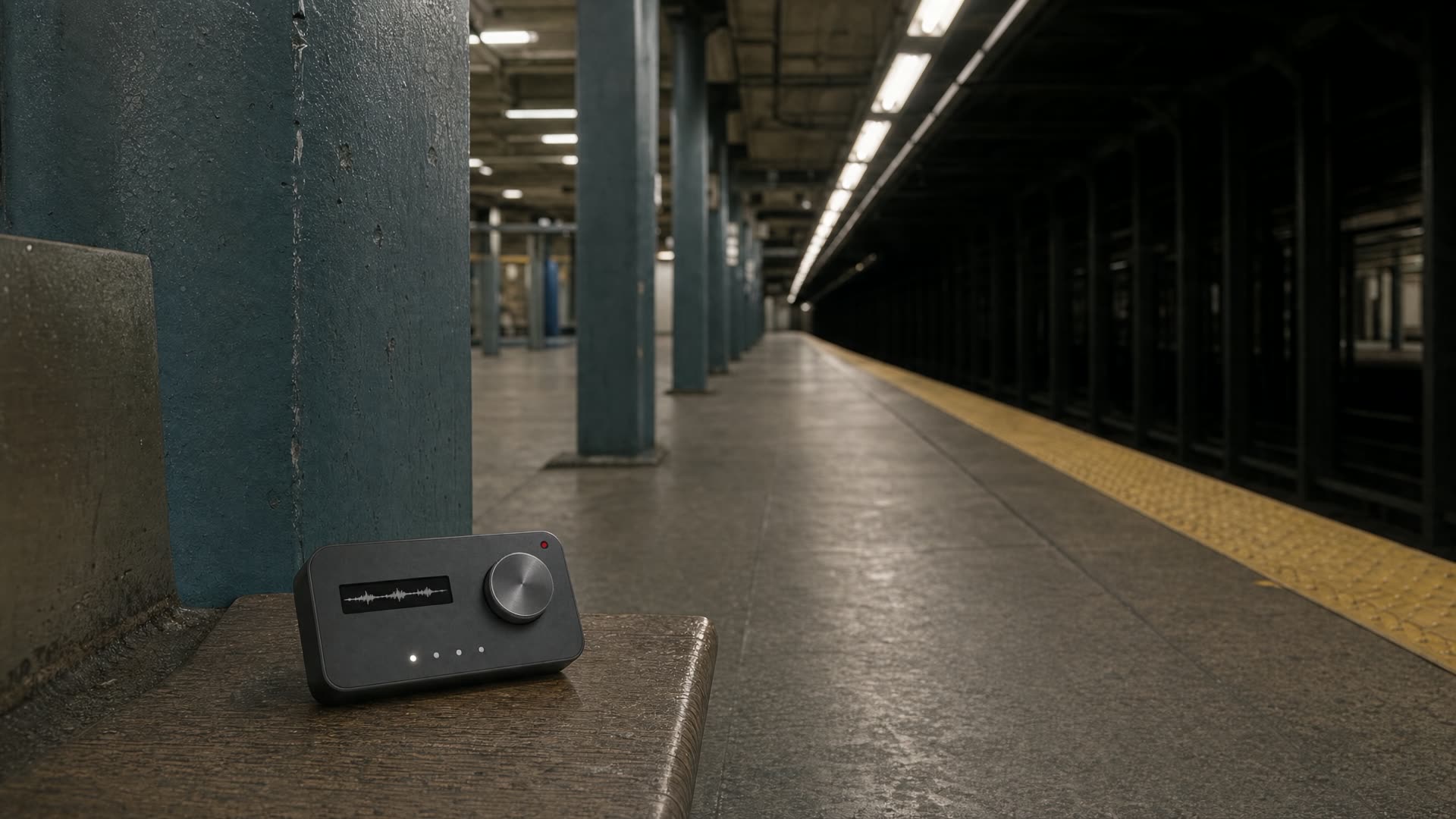
Train departs
1 / 4
-
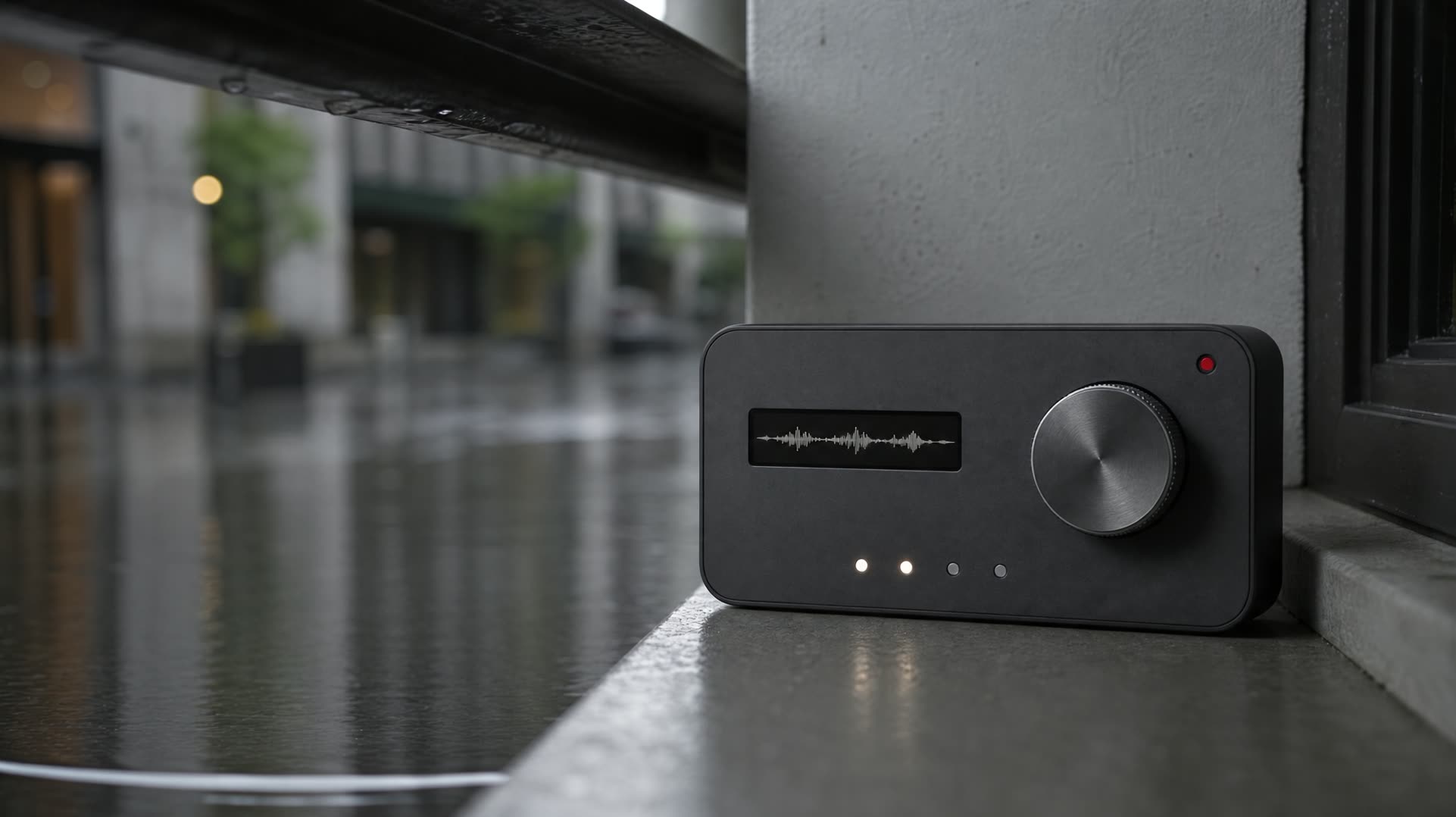
Last raindrop
2 / 4
-
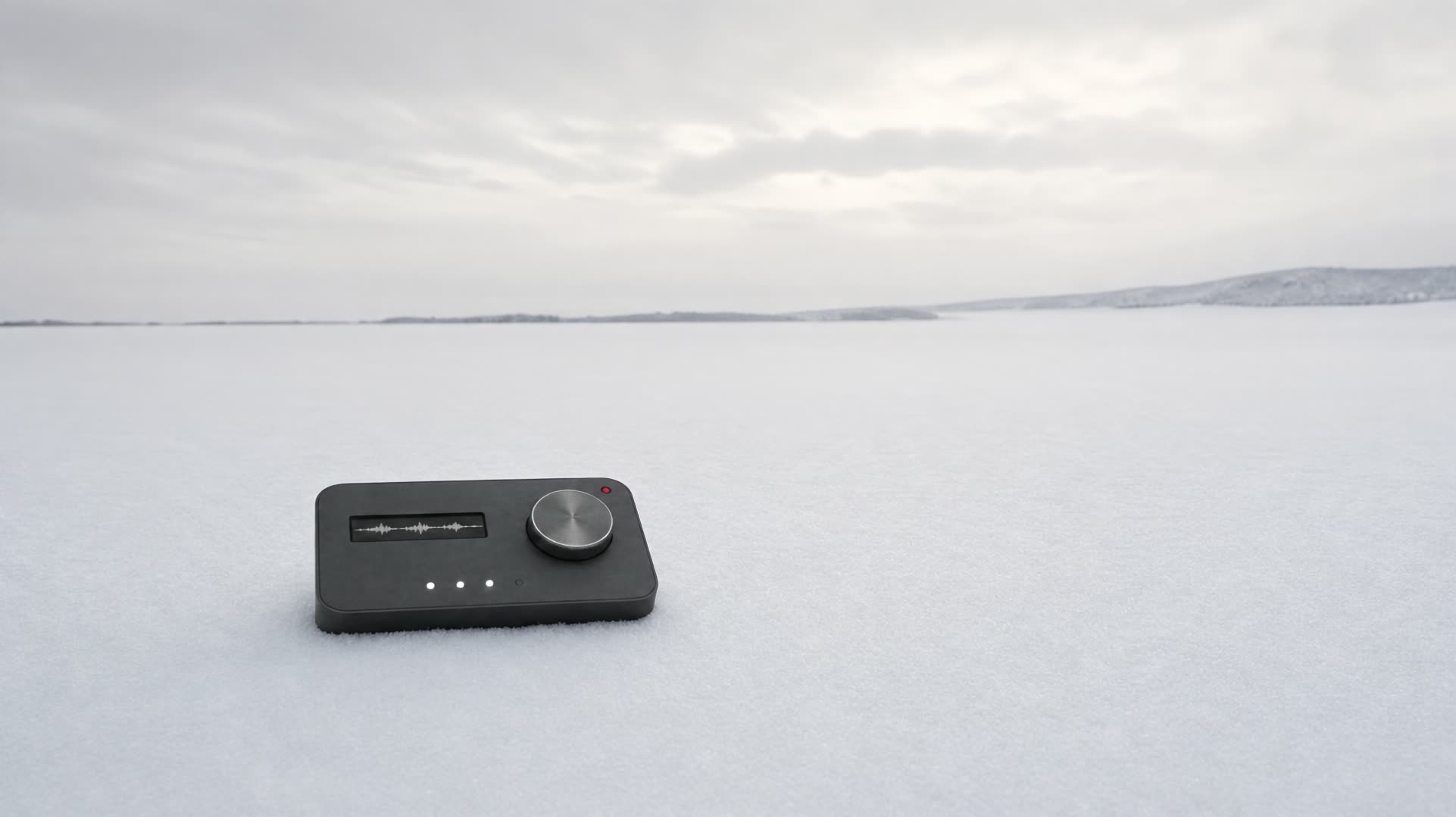
Silent snowfield
3 / 4
-
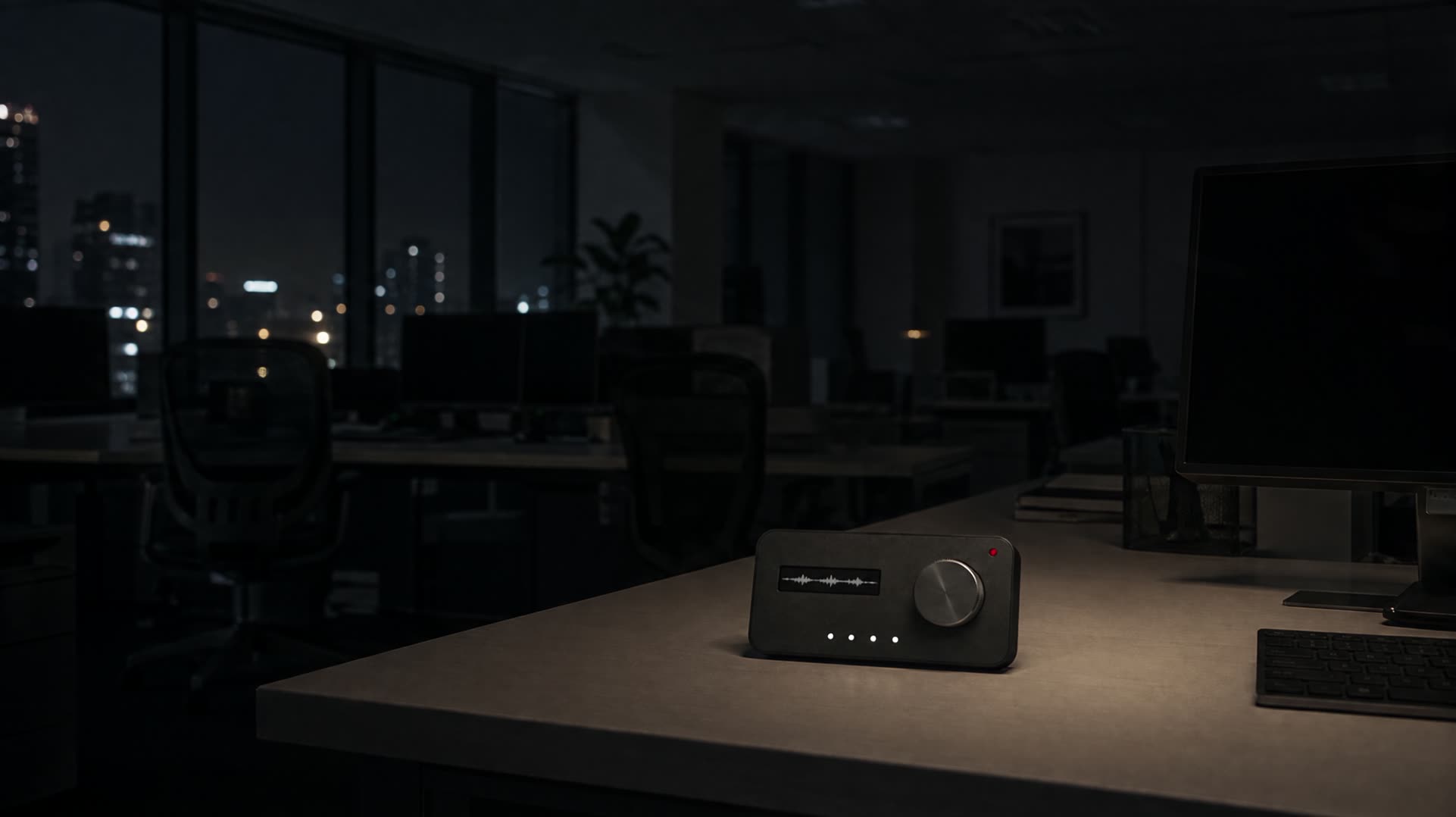
Last light goes out
4 / 4
Three lines I don't cross
-
No master design, no generation
One master design is fixed before generation: body proportions, waveform display, one dial, four lamps. Drift between shots is the commonest failure in generated video; the master design holds it in check.
-
Wrong lamp count, no shot
The four lamps are the story's progress bar: how many are lit is how many silences have been kept. If the count is wrong the shot is scrap, however beautiful the frame. The acceptance criteria are written before generation begins.
-
Fix the part, not the whole shot
Regenerating a whole shot throws away everything that was already right. So failures are classified and located first, and a local fix is preferred to regenerating the shot. That is a quality policy as much as a cost policy.
The production canvas
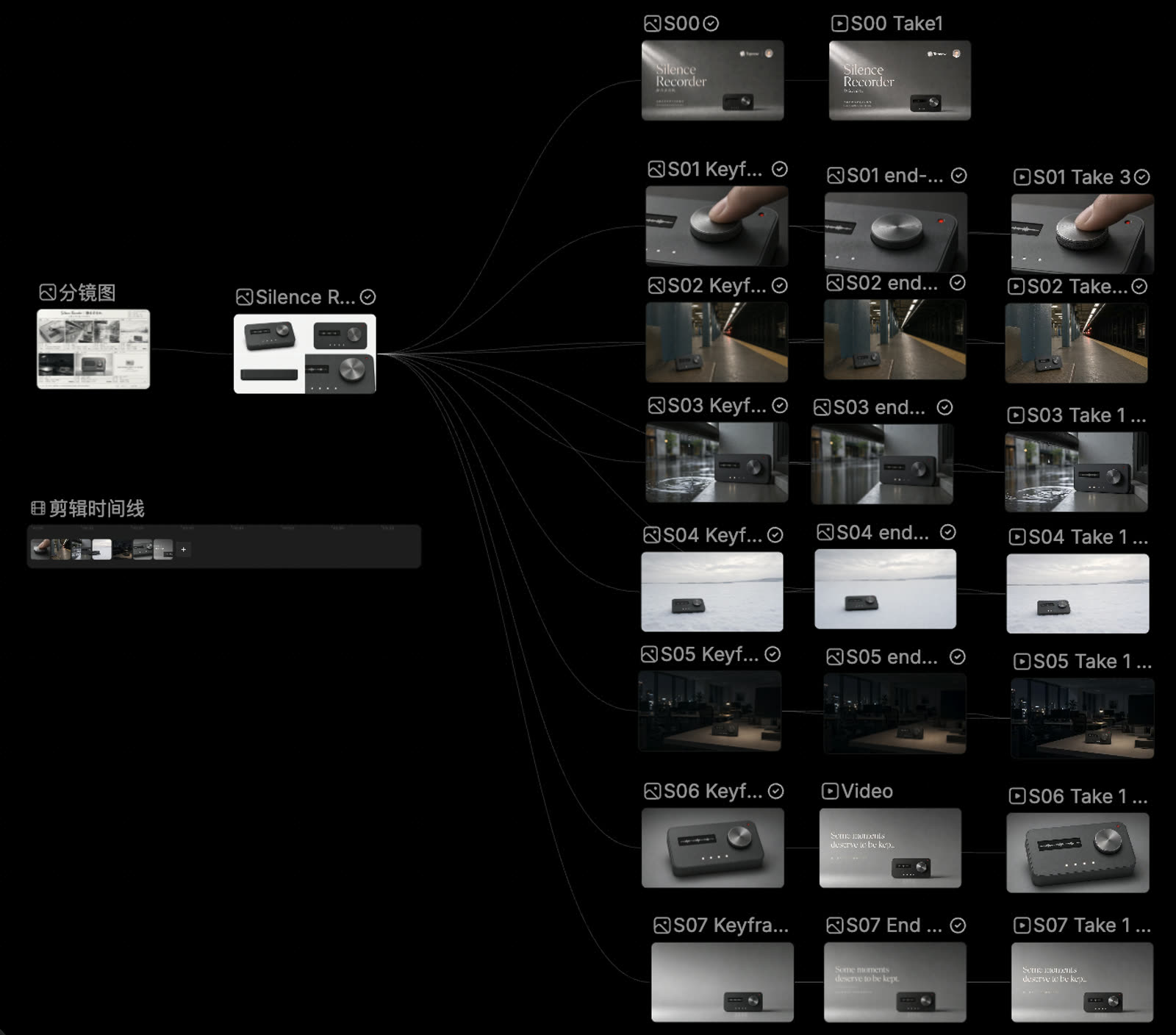
The whole production chain on the TapNow canvas. The storyboard and the single product master sit on the left; every shot branches from that master as keyframe → end frame → generated take; the edit timeline runs underneath. The master exists before any shot does — that is the structure generation starts from, not tidying done afterwards.
Production & credit
Thirty seconds, seven shots, made on TapNow .